Budgeting happens every year and takes up a considerable amount of the team's time. The basic aim of most budgets is to decide how much growth to aim for, what the expenses will be, and how to meet short- and long-term goals. In this post we look at budgeting from the revenue point of view.
A budget is a guide that gives management the standards against which to measure the success of the operation. It provides the financial framework within which every department operates. It is also the basis for financial planning and for upgrading the hotel's product and facilities.
Revenue management has an important role in budgeting. One essential is that the budget is started at the right time. Leaving it to the last minute shows it is being done for its own sake. Good budgeting can take two to three months. Ideally it is complete before March, so everyone knows the goals and can plan what to achieve from April.
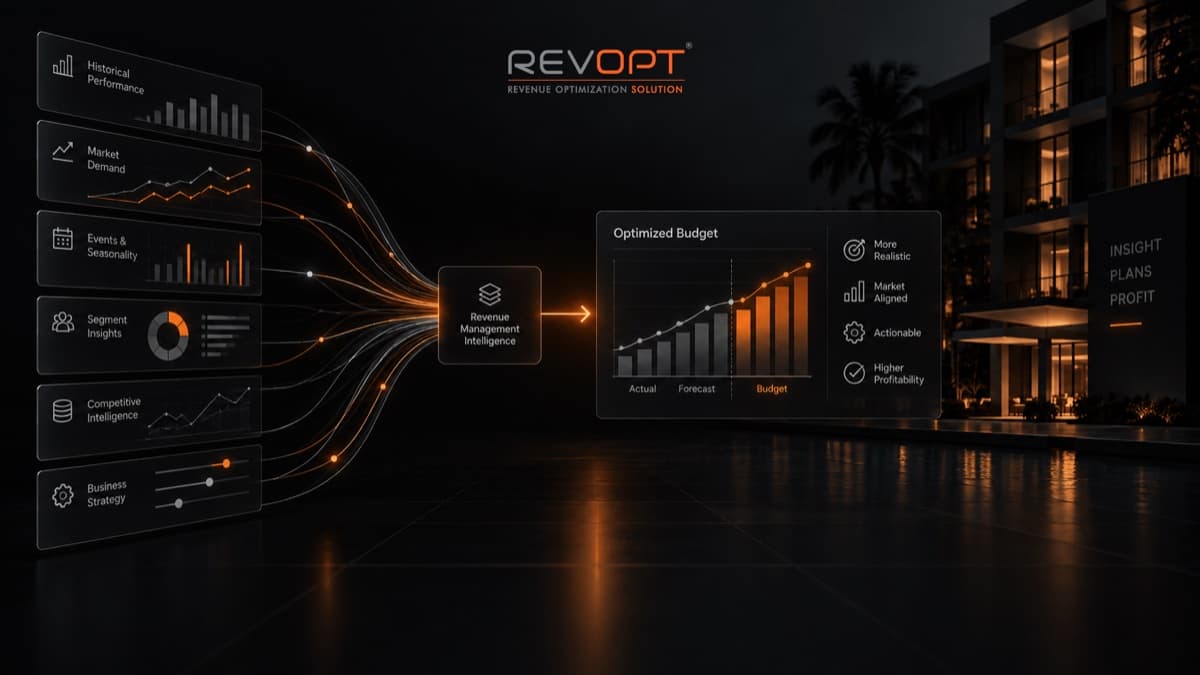
Collecting accurate and sufficient data is essential to any budget. Past performance by segment, business on the books, and next year's activity calendar (is a large event coming?) are all needed for an accurate forecast of next year's revenue. You also need to know about any expansion or activity planned by competitors, and any new competition coming into the market.
A hotel budget is only as accurate as the effort made to gather market data. Budgeting means predicting how the hotel's core markets will change over the coming year, and where the wider economy is heading. The budget is a once-a-year task, but gathering information about the hotel industry and the local economy is continuous. It gives you a clear picture of what the future may look like when you set the assumptions behind the key variables in the budget.
The budget needs to be segmented into achievable targets, with a plan for each segment. What are the fixed segment targets, the expected growth and the price increase? Are you planning to change your business mix? What marketing activity will you need to achieve next year's plan, and what will it cost?
Are there new segments you want to target? To answer that, you need to understand the segments you are already in, their market dynamics and what is changing in them. Are you planning to expand your offer to a new source segment? What is the plan, and what will it cost? How much should you invest in online marketing, which is essential today?
Pricing correctly has a direct impact on business, and the right price can lead to an exponential increase in the bottom line.
Other factors to consider include changes in technology: how it can be used, and what impact it will have on your hotel. Rapid advances in technology have radically changed the distribution landscape, and how hotels acquire new clients and retain existing ones. Budgeting is a complicated exercise, but done well it keeps the hotel on course for its long- and short-term goals.
Common mistakes
Rushing the planning process produces a budget that is a less useful management tool than it should be. Hotels tend to build their expense budgets by taking last year's numbers and adjusting them upward by an assumed percentage, such as 5 or 10 percent. A better approach is to build a completely new budget each year, with a justification for every expense. This keeps management focused on finding ways to improve the hotel's operation, rather than being satisfied with how things were done in the past. Last year's marketing spend should be checked to make sure it actually generated revenue before it is included in this year's budget.