A 2003 McKinsey study of S&P 1500 companies found that a 1% price rise, with volume unchanged, lifts operating profit by about 8% — more than three times the effect of a 1% rise in volume.
Most hotels that contract rates in their negotiated segments have very limited room to optimise those prices; they generally have to wait until the contract period ends, or until a periodic review of production. The unqualified segment, on the other hand, offers the largest opportunity for price optimisation. That opportunity opens up when a hotel moves from traditional static pricing with fixed discounts to dynamic pricing.
What advantages does dynamic pricing offer?
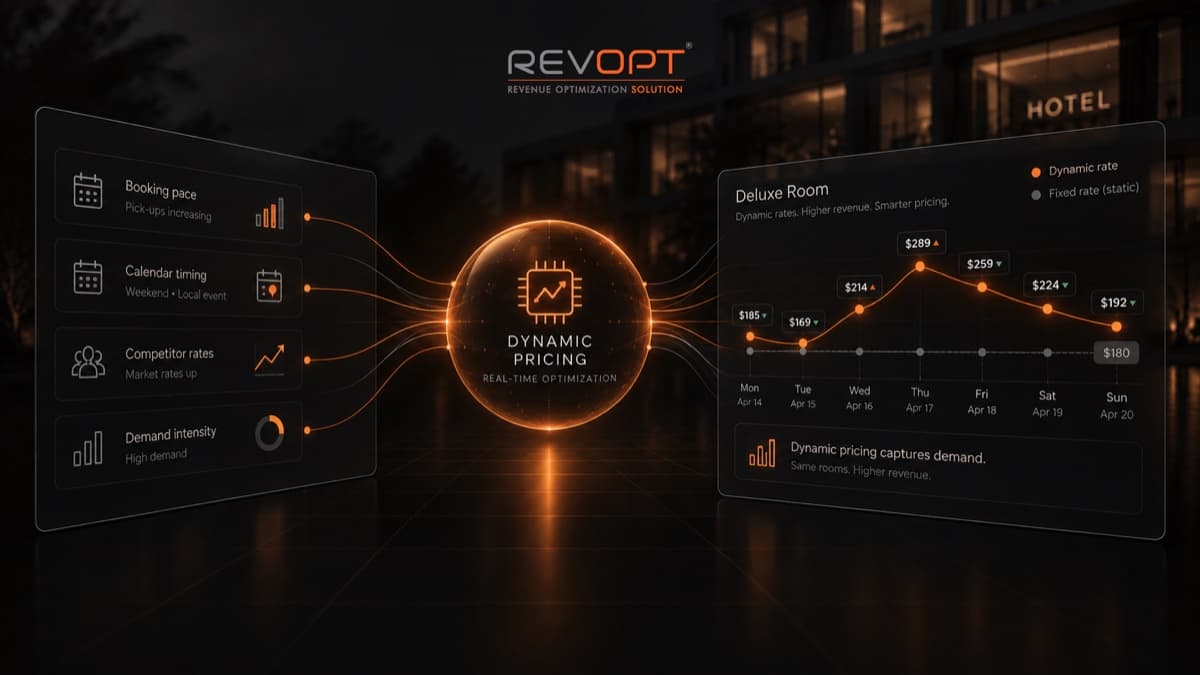
The most important advantage of dynamic pricing is an agile pricing structure. It lets the revenue manager react quickly to changing market conditions, use the pricing structure to maximise revenue, and offer customers the best value.
The basics of dynamic pricing
Implementing dynamic pricing starts with understanding your hotel's existing business pattern and clearly defining its market segments. Next comes the BAR pricing structure: multi-tiered BAR pricing, set from the lowest BAR to the highest.
At its simplest, a hotel can link its BAR levels to rising occupancy, with lower prices when occupancy is lower. However, the key to maximising the hotel's revenue potential lies in accurately forecasting occupancy for each day, adjusting prices dynamically, applying booking restrictions as demand changes, and combining all of this with inventory control.
Understanding some basic terms
Dynamic pricing: the strategy of offering variable prices in line with demand and supply, driven by pricing strategy.
Market segmentation: for demand analysis, the overall market is divided into segments based on the behaviour of the business. Segmentation defines the major types of demand, identifies customer characteristics and business behaviour, and estimates future growth. By analysing demand in these segments, a hotel can work out how to compete in its market and plan accordingly. Understanding your own market segmentation, and your competitors', is essential, because it affects occupancy penetration, average daily rate positioning and potential revenue.
Special events: events can have a positive or negative impact on occupancy, ADR and revenue. They can be one-off, such as a major conference in the city or a natural calamity, or recurring, such as trade fairs, conventions, public holidays and festivals. Look at the historical effect of these events and forecast demand, so you can adjust pricing, booking restrictions and inventory controls to optimise yield and occupancy during those periods.
BAR: a daily flexible rate, often called the Best Available Rate or Best Guaranteed Rate. It is recommended for unqualified business where there is no pre-agreed rate: the optimal rate to quote, based on the probability of booking the guest.
Advance purchase rate: a discounted rate that normally requires an advance reservation with a full, usually non-refundable deposit. It appeals to guests with definite travel plans made well ahead of time. It is also called a derivative BAR.
Using dynamic pricing to your advantage
The success of dynamic pricing lies in accurately determining demand, and customers' willingness to pay different prices at different times for the same product. Look beyond the volume of demand and understand segment dynamics before applying rate controls.
Populate your derivative BARs with small or deep discounts, with fencing that matches the size of the discount. Remember that heavy fencing, such as charging the entire stay for a no-show or an early departure, can stop customers booking your hotel whatever the discount. So you may want customised cancellation, no-show and early-departure policies for these rates, separate from the hotel's general policies.
Decide the BAR level from your structured BAR tiers, based on the factors in play. Deriving the right BAR can be very complicated, because so many variables influence the decision: day of the week, special events, booking pace, length of stay and many more.
Derivative pricing consists of small discounts with lighter fencing, and deep discounts with tougher conditions: a deposit, no cancellation or amendment, minimum length of stay, a longer lead time before arrival, or a stay over a weekend or a shoulder night. This way a hotel can capture a good volume of long-lead bookings to build its base occupancy, and yield high on peak-demand dates by raising the daily flexible rate.
Questions to ask when using dynamic pricing as a competitive tool
- How is my pricing influencing my brand associations?
- Are my price-band associations optimal?
- How do I compare with my competitors' price-band associations? Am I leaving money on the table?
- Does my pricing strategy take both price and value into account?
To conclude: dynamic pricing helps a hotel win incremental room nights in low-demand periods and optimise yield on high-demand and peak days, by varying prices through derivative rates linked to the Best Available Rate.