Objective
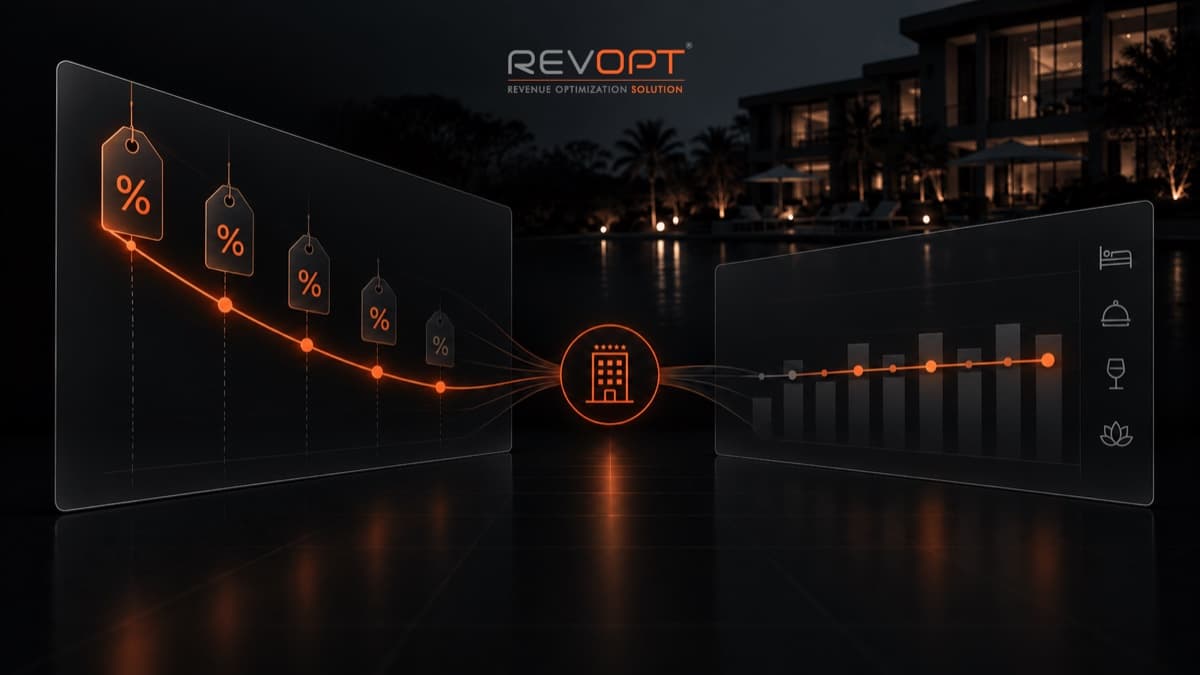
Discounting is not an effective way to increase revenue. It can drop your yield if the volume you hoped for is not generated.
Challenge
Hotels often become desperate to discount during distressed periods of low occupancy. These discounts tend to be ad hoc and unlimited, made in the expectation of a certain volume. Hotels assume that dropping the price will increase the sale. But unless a hotel has a specific mechanism to track the volume that comes in while a discount is on offer, it never really knows when it started discounting, or when to stop.
A 2003 McKinsey study of S&P 1500 companies found that a 1% price rise, with volume unchanged, lifts operating profit by about 8% — more than three times the effect of a 1% rise in volume. So how can discounting bring in more profit? Should a hotel discount at all? There are two kinds of discount: ad hoc and qualified.
An ad hoc discount is unlimited and unconditional. A qualified discount is conditional. When you discount, you should get something in return, generally volume, or business you actually need. The aim is to capture more demand by taking it from your competitors.
On the other hand, think about what a discount does to the perceived value of your product in the customer's mind. It raises too many questions:
Are you a cheap product? Is your quality questionable? Will you discount further if I negotiate? Should I wait for a bigger discount, and will that delay the sale or lose it altogether? Am I getting the full benefits of the product? Are you flexible? Are there hidden terms and conditions?
These questions are answered when the customer has to qualify for the discount. How do we do that?
Discount only on your dynamic pricing, which is generally the Best Available Rate. This is why we use derivative Best Available Rates: rates above or below the BAR, derived from or linked to the BAR for that day, so any change to the BAR changes them too. Typical derivative rates include value-added packages, advance purchase rates, non-refundable rates and negotiated rates.
Try not to discount your fixed or contracted rates out of desperation; you then risk being held to those discounted values for the rest of the contract. Instead, discount by building a fence around the product. Create two levels of discount, and make sure the customer has to qualify for them.
Create small discounts and deeper discounts
Small discounts are a small percentage off, lightly fenced. Deeper discounts are a higher percentage off, heavily fenced. Fencing means putting a condition around the sale. Common fences include:
- A stay through a shoulder night
- A cancellation fee
- A minimum length of stay
- Advance purchase: booking a set number of days ahead
- A full deposit
- Non-refundable and non-cancellable terms
Build your discount structure from these fences. Don't fence every discount so heavily that you never make a sale; equally, don't fence so lightly that your yield falls. While you discount, make sure you still have the optimal rate in place to capture the demand.
Remember too that discounts can be limited to certain channels, depending on the fence. For example, you could offer a discount to customers who contact your reservations centre, but not online, where the booking is secured by a guarantee or payment. This also helps you channel your sales in a more organised way.
Keep absolute control over your discounts by choosing the right period. Know when to start discounting and when to stop. If you cannot stop, you might as well not start.
Recommendation
The purpose of discounting is to secure long-lead bookings, and not to miss out on last-minute inventory that has little time left to sell. It exists to capture more demand in low-occupancy periods, fill the shoulder nights and build a threshold occupancy. Once you can measure how much business the discount has actually brought in, you will know when to stop.
Happy selling!