
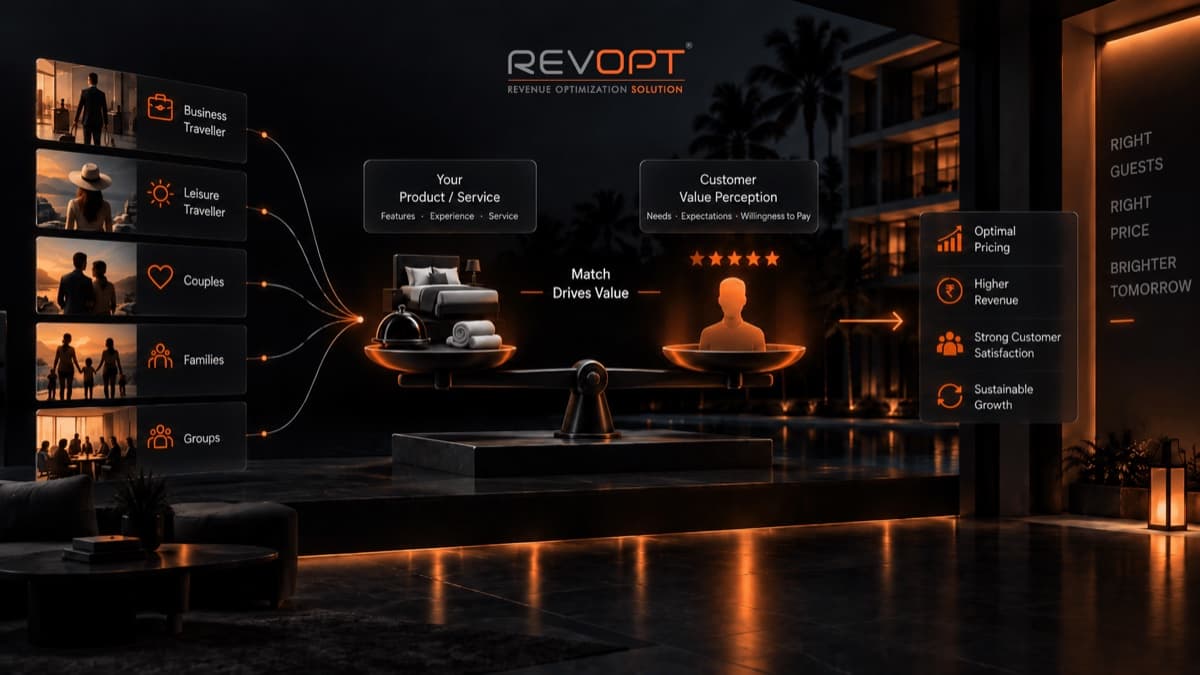
In our previous posts we looked at how the right price structure and dynamic pricing help you win the right business mix without leaving money on the table. This post looks at the customer's value perception.
Objective
The key to successful pricing is to match the product or service with the customer's value perception. Perception is everything.
In other words, match what the customer understands your product to be with the price they pay for it.
I would like to share an experience. A couple of weeks ago I was exploring a suburban shopping centre when I decided to buy a loaf of bread for dinner. As I walked along the street I came to a supermarket. Then, across the road, I spotted a little bakery. So off I went to the bakery: "A wholegrain loaf, please." I had committed to buying the loaf just by walking in the door.
Price was not important in my buying decision; something else was. That something else was perception. Your customers' perception of you can matter more than your price.
Why did I choose the little bakery over the supermarket? Perception. I perceived that the quality would be better. But who is to say the supermarket didn't have a product just as good as the bakery's, or better?
So could it be that by focusing too much on price, we set up an expectation of lower quality in the customer's mind? Could it be that by focusing too much on price, we make our service look suspect? Absolutely.
Successful pricing hinges on the buyer's perception of value. Value perception, or utility, is the customer's assessment of everything they have received compared with what they have given. They ask themselves: by giving up this much money, what am I getting, not just in physical features but in overall benefits?
Does it feel right?
It doesn't matter what you charge. It is the customer's perception of your price that matters. If the customer thinks the price is too high for the value delivered, they won't buy. If they think it is too low, they may not buy either, because they may be suspicious of the quality at that price. The price may not feel right.
A customer's sense of a reasonable price matters more than what you want to charge. And the customer decides what is reasonable based on perceived value for money, not on price. Creating that perception of value is what tells the customer the price is right. I firmly believe that, in the long term, it is always better to add perceived value to your product than to reduce your prices.
Customers today are smarter, have more disposable income and have more choice than ever before. The key to making the sale is to communicate value, so strongly that the price seems reasonable for the product or service you are offering.
In my earlier articles on pricing I wrote about customers' behaviour patterns. The goal is to understand what your customers are looking for, and to decide whether you are giving it to them. How do you think the customer will perceive the value of this exchange?
Of course, the more a customer gets and the less they pay, the higher their perception of value. So if you want to increase your price, create a new product for the same market segment or promote a new package, gear your marketing so the customer believes they are getting added benefit for the higher price.
This is why hotel marketing materials list the benefits before they mention the price. By the time customers have read the benefits, their value perception is higher, and they see the price as reasonable for what they receive.
The key to making the sale is to communicate value, and to do it strongly.
Happy selling!